Offsets and Credits
How Forest Carbon Credits Are Verified
What an auditor checks before a forest carbon credit is issued: sample plots, satellite baselines, leakage, the buffer pool and the registry record.
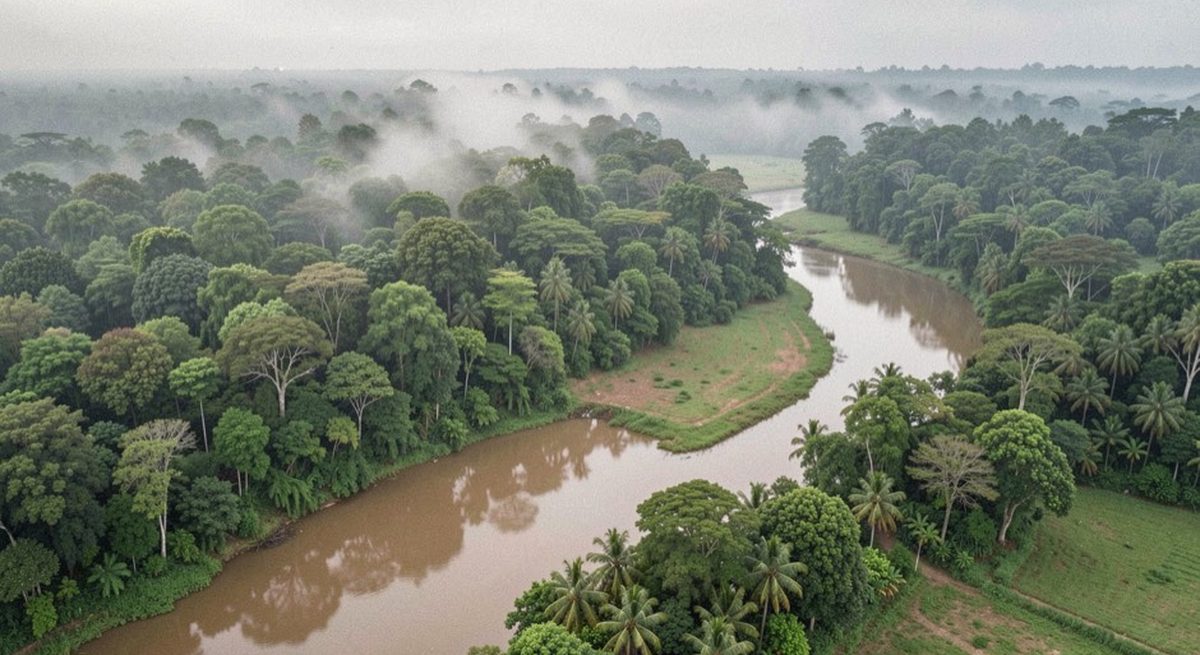
Why are forest credits harder to verify than energy credits?
A wind farm has a meter. A forest does not. The carbon held in wood is estimated from samples, and the credited tonne is the gap between that estimate and a counterfactual that nobody can observe directly. Three uncertainties stack on top of each other: how much carbon the trees hold, what would have happened to them without the project, and whether the carbon stays where it is once the credits have been sold. The general guide to how offsets are verified covers additionality, registries and double counting for every project type; forestry adds measurement and permanence problems of its own.
That is also why forest projects attract most of the controversy in the voluntary market. In January 2023 the Guardian, the German weekly Die Zeit and the nonprofit newsroom SourceMaterial published an investigation concluding that more than 90 percent of the rainforest credits certified by Verra were likely to represent no real reduction. Verra rejected the findings and published a technical review contesting the methods of the studies behind them. The argument turned on baselines, which is where most disputes about forest credits begin.
Three kinds of forest project, three different questions
Forest offsets come in three broad families, and each one puts a different question in front of the auditor. Afforestation, reforestation and revegetation, usually shortened to ARR, establishes trees on land that does not currently carry forest, so the credit is a removal of carbon dioxide from the air. Improved forest management, or IFM, changes how a working forest is harvested, for example by cutting less or waiting longer between harvests. REDD+, which stands for reducing emissions from deforestation and forest degradation, pays to keep standing forest standing, so its credits are avoided emissions rather than removals.
| Project type | What is credited | Hardest question to verify | Main risk after issuance |
|---|---|---|---|
| ARR (new planting or regrowth) | Carbon removed by new tree growth | Whether the trees grow as fast as claimed, and whether the land would have regrown anyway | Fire, drought or pests killing young stands |
| IFM (changed harvesting) | Carbon kept in the forest by harvesting less | The harvest level the owner would otherwise have chosen | Later logging, fire, harvesting shifted to other land |
| REDD+ (protected forest) | Emissions avoided by preventing clearance | How much forest would have been cleared without the project | Encroachment, fire, clearing pushed elsewhere |
The comparison with clean energy and methane capture, the other large families in the market, is set out in the guide to offset project types.
How is the carbon in a forest actually measured?
Measurement starts on the ground. A project lays out sample plots across its area, and in each plot field crews record every tree above a minimum size: its species, its trunk diameter at breast height and often its height. Equations built from felled and weighed trees, known as allometric equations, turn those measurements into an estimate of dry biomass. Roughly half of dry wood is carbon, and international guidance uses a default carbon fraction of 0.47 where better local data are missing. The carbon figure is then multiplied by 44/12, about 3.67, the ratio of the molecular weights of carbon dioxide and carbon, to express the result in tonnes of CO2.
The IPCC guidelines for national greenhouse gas inventories recognise five forest carbon pools: aboveground biomass, belowground biomass, dead wood, litter and soil organic carbon. Each methodology states which pools a project must count and which it may leave out, typically only when leaving a pool out cannot inflate the credits. Satellite imagery and airborne laser scanning, known as LiDAR, then extend the plot results across the whole project and show where forest cover has been gained or lost. During verification the auditor reviews the plot data and the calculations, and can return to the field to remeasure trees and check that the figures on paper match the forest.
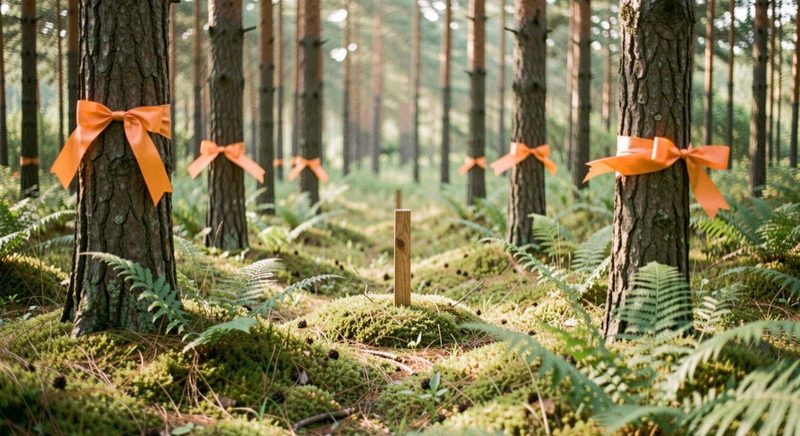
Who checks the forest, and who checks the checker?
The audit is carried out by a validation and verification body, an independent firm paid by the project developer but approved by the standard. Under Verra's program such a body needs accreditation to ISO 14065 from an accreditation body that belongs to the International Accreditation Forum, or approval under the United Nations Clean Development Mechanism, and the approval must cover the sectoral scope for agriculture, forestry and other land use. Verra also scores the performance of these auditors and can suspend them.
Two moments matter. Validation comes first and checks that the project design and its baseline follow the chosen methodology. Verification happens again and again: each time it covers a defined monitoring period, and credits are issued only for the tonnes verified in that period. A project that stops verifying stops issuing.
Why does the baseline cause most disputes?
For a REDD+ project the baseline is a forecast of how much forest would have been lost. Under the older methodologies each developer built its own reference scenario, which gave every project a reason to forecast heavy clearing. Verra's consolidated REDD methodology, VM0048, active since 27 November 2023, changes the order of work. Deforestation is first estimated across a whole jurisdiction, and Verra then allocates that total to individual projects according to a map of deforestation risk, so the projects in one region cannot together claim more avoided loss than the region was expected to lose. The data are developed by Verra with contracted data providers rather than by each developer.
New planting faced a mirror image of the problem: crediting trees that would have grown back on their own. Verra's ARR methodology, VM0047, released on 3 October 2023, answers it with a dynamic performance benchmark. The project area is matched to similar control plots outside it, and remote sensing tracks the change in vegetation cover in both. The comparison tests additionality and sets the crediting baseline again at every verification, so a project is credited only for growth beyond what the surrounding landscape achieved without it.
What is leakage, and how is it subtracted?
Leakage is the clearing or harvesting that a project pushes elsewhere. If a protected forest stops farmers from clearing land, some of them may clear a neighbouring forest instead; if a company harvests less timber, the market may simply buy it from another forest. Methodologies require an estimate of this displacement and subtract it from the credited tonnes. Under VM0047, for example, projects using the area based approach must apply a separate module for leakage caused by displacing earlier farming. A verification report that shows zero leakage without explaining why deserves a second look.
How does the buffer pool handle fire, pests and logging?
Because forest carbon can return to the air, standards hold part of every forest project's credits in reserve. Under Verra's rules, a share of the credits from each verification goes into a pooled buffer account, and the size of that share comes from a non permanence risk tool that scores internal, external and natural risks. A project rated too risky fails the analysis. Buffer credits cannot be sold, and the withholding is recalculated each time the project is verified.
The buffer is drawn on when a forest is lost. In a statement published in September 2018, Verra described illegal gold and diamond mining that had entered the Suruí indigenous territory in the Brazilian Amazon in 2014 and 2015, and the forest loss that followed. It put 251,529 buffer credits on hold, equal to every credit the project had issued, to be cancelled once a later verification confirmed the loss.
Whether buffers are large enough is an open question. A peer reviewed study by researchers at CarbonPlan, published in Frontiers in Forests and Global Change on 5 August 2022, examined California's compliance forest offset program and estimated that wildfires had used up at least 95 percent of the buffer contribution meant to cover all fire risk for 100 years, in less than a decade. The study covers one program and one kind of risk, but it shows why a buyer should ask how a buffer is sized, not only whether it exists.
What has changed since the Integrity Council began assessing forest methods?
The Integrity Council for the Voluntary Carbon Market, known as the ICVCM, assesses methodologies against its Core Carbon Principles. On 15 November 2024 it approved three REDD+ methodologies: the TREES v2.0 standard of ART at its crediting level, Verra's VM0048 v1.0 and Verra's Jurisdictional and Nested REDD+ Framework v4.1. Verra had kept its older REDD methodologies, VM0006, VM0007, VM0009, VM0015 and VM0037, out of the assessment, so credits issued under them cannot carry the label. The council approved VM0047 for planting projects in December 2024. The label tells a buyer that the method passed an outside review and that the project met the stated conditions; it does not remove the risk of a later fire or encroachment.
How can a buyer read a forest project's verification report?
Most of what matters can be checked in the public documents a standard publishes for each project. Five questions sort strong reports from weak ones.
- Which methodology and which version were used, and is it one of the newer methods assessed by the ICVCM or an older one that is being phased out?
- Which monitoring period does the verification cover, and how recent is it compared with the vintage of the credits on offer?
- Who set the baseline, the developer alone or a jurisdictional dataset, and when is it due to be reassessed?
- How many tonnes were deducted for leakage and for the buffer, and do those deductions look proportionate to the risks described?
- Has any loss event been reported, and does the registry show the credits as issued, held or retired?
The registry step is the same for every project type, and the guide to how carbon offsets work follows a credit from purchase to retirement.
Forest offset checks in brief
How often is a forest carbon project verified?
The interval depends on the standard and the methodology, but the principle is the same everywhere: credits are issued only after a monitoring period has been verified. A forest project that stops verifying stops issuing credits, and under Verra its buffer contribution is recalculated at every verification.
Can satellites replace measurements on the ground?
Not on their own. Satellite imagery and LiDAR show where forest cover changes and how canopy height varies, while ground plots supply the tree measurements that turn those maps into tonnes of carbon. Even VM0047, which relies on remote sensing for its benchmark, combines it with plot based sampling of carbon stocks.
Does an ICVCM label mean a forest credit is safe?
It means the methodology passed the Integrity Council's assessment and the project met the conditions attached to that approval. It does not guarantee that the forest will survive, which is why the buffer pool and the project's own loss reporting still matter after the credit is issued.