Cutting Emissions
Swimming Pool Energy Use and Emissions
Where a backyard pool's energy goes, why the pump and heater matter most, and which fixes cut emissions first, from variable speed pumps to covers.
How much energy does a swimming pool use?
The short answer is that it depends on the pump, the climate and whether the water is heated, and the range is wide. In a mild climate with an unheated pool, the circulation pump is usually the largest single user, and it can rank among the biggest electricity loads in the house. ENERGY STAR describes a pool pump as potentially the second largest energy user in a home, behind the heating and cooling system. With a gas or electric heater added, the heating can overtake the pump by a wide margin, especially in spring and autumn when the air is cool and the heater has to fight evaporation.
Because the numbers vary so much, a calculation from your own bills is more useful than a national average. Read the pump's label for its wattage, multiply by the hours it runs each day and by the days in a season, and convert the result with the electricity factor for your region. The footprint calculator follows the same pattern for every other appliance in the house.
Does the way a pool is built change its running emissions?
Yes, more than most owners expect. The shape and depth set the volume of water to move and heat, the surface finish affects how much the shell leaks heat, and the pipework layout decides how hard the pump has to work. Owners who are still at the design stage, or renovating an old basin, can see the main options laid out by a builder such as Bassins de la Torse, a French company that builds and renovates pools around Aix-en-Provence in shell, concrete and liner versions, with paving and coping around the water. The comparison is useful even for readers elsewhere, because a pump sized for the real volume and a hydraulic layout with few tight bends are choices made once and paid for every season afterwards.
Where a pool's energy actually goes
Three blocks account for nearly everything. The first is circulation: water has to be pushed through a filter often enough to stay clear, and an older single speed pump does that at full power for the whole run time. The second is heating, which replaces the heat lost to the air, the ground and above all evaporation from the surface. The third is the small stuff, such as lights, an automatic cleaner and a salt chlorinator, which is real but rarely more than a few percent of the total.
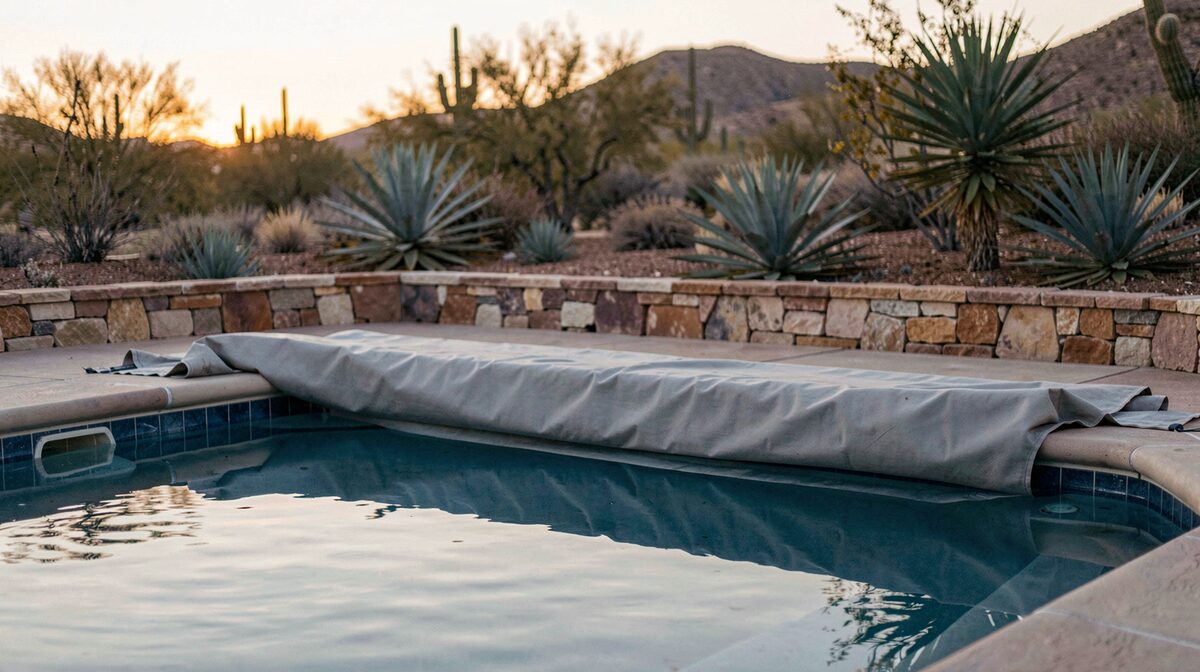
Evaporation deserves a note because it is invisible. Every litre that evaporates carries heat away with it, so an uncovered pool on a windy night can lose a surprising amount of warmth without any sign. That is why a cover is the first item in most efficiency lists, and why shelter from wind helps too.
Which fix cuts the most: pump, cover or heater?
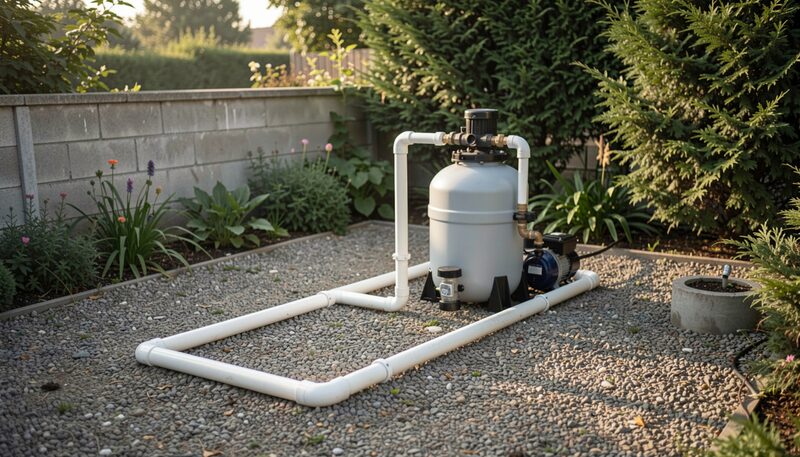
For an unheated pool, the pump comes first. ENERGY STAR notes that a variable speed pump running at half speed uses only about one eighth of the energy, because the power a pump needs rises steeply with speed. Running the pump slower for longer filters the same volume of water for a fraction of the electricity. Its guidance on certified pool pumps also says the payback can be short. If you cannot change the pump, shortening the run time to what the water actually needs is the next best move, and a simple timer is enough.
For a heated pool, the cover and the heater type move to the top. A cover that stays on whenever the pool is not in use cuts evaporation, which is the biggest source of heat loss. A heat pump heater uses electricity to move heat rather than to create it, so it delivers several units of heat for each unit of electricity, while a resistance heater delivers one. Gas heaters burn fuel directly and sit in between on running cost but carry the highest direct emissions. If the grid in your region is getting cleaner, an electric heat pump gets better every year, which is the same logic described in the home energy guide.
What does a sensible pool schedule look like?
The principle is to match the equipment to the water, not the other way round. A pool needs the full volume filtered roughly once or twice a day in normal use, and a variable speed pump can do that at low speed over many hours. Heating can be limited to the weeks that matter, with a cover on at night, and a lower set point saves energy every degree of the way. Switching the heater off entirely in the shoulder seasons is a legitimate choice and, for most households, the single largest cut available after the pump.
It also helps to treat the pool as part of the household total. If a family is already working through the list in cutting emissions at home and at work, the pool belongs in the same ranking as the boiler and the car, not in a separate category of leisure spending.
Is a solar cover or solar heating worth it?
Solar blankets and rooftop solar pool heaters use sunlight to do the work the heater would do, and in a sunny climate they can cover most of the demand of a short swimming season. They are simple, and the main costs are the up front purchase and the effort of handling a cover. Their carbon value is easy to calculate: the fuel or electricity they replace, multiplied by its emission factor, over the weeks you would otherwise have been heating. In a cool or cloudy climate the benefit is smaller and a good cover alone may do most of the job.
Should the pool be offset?
Offsetting is the last step, not the first. The sequence that holds up is to measure the pool's share, cut it with the pump, the cover and the heating schedule, and only then think about compensating for what remains. The offsets and credits section explains how to judge a credit before buying one. For a typical pool the remaining emissions after sensible measures are modest, which is a good argument for doing the reducing first.
How do you explain the pool to a household or a class?
A pool makes a good teaching example because every part of the footprint is visible: a pump with a label, a heater with a meter, and water that loses heat in plain view. Ask what runs, for how long, and what each hour costs in electricity or fuel, then compare the answers with the car and the heating. The pattern of a few large items and many small ones repeats across the whole household footprint, and seeing it on something as concrete as a pool makes the larger lesson easier to remember.